
-
 Email:news@peweldingmachine.com
-
 +86-137 3974 5191
-
 Add:
Add:NO.355,Youyi Street,Qiaoxi District,Shijiazhuang,Hebei,China.



High-Precision Air Pressure Tester for Plumbing & Coolant Lines

High-Precision Air Pressure Tester for Plumbing & Coolant Lines
Jul . 29, 2025 18:40
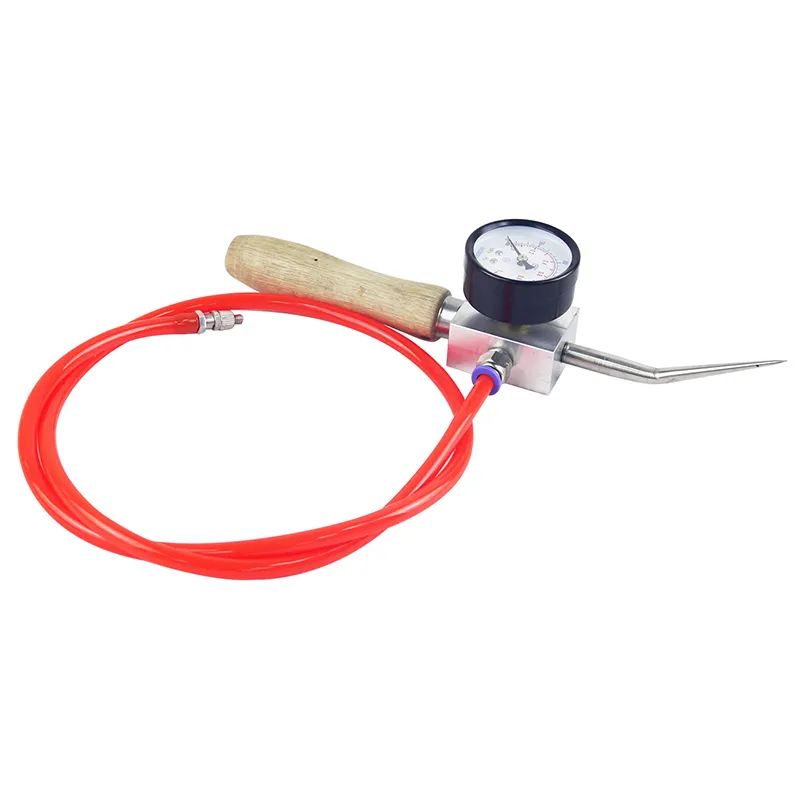 The **air pressure tester** is a precision instrument widely applied in plumbing, coolant system, water line pressure tests and industrial processes that require robust, safe, and accurate verification of pipeline and system integrity. With technological advancements and stricter industry regulations, contemporary **air pressure testers** (including variants like air pressure tester for plumbing, air powered coolant pressure tester, and air to air pressure tester) are engineered to deliver enhanced sensitivity, reliability, and operational safety across petrochemical, metallurgy, water supply, and construction sectors.
I. Industry Trends and Market Insights in Air Pressure Tester Technology
| Year | Global Revenue (USD Million) | Market Penetration (%) | Major End Users (by segment %) |
|---|---|---|---|
| 2020 | 614 | 62 | Plumbing 35%, Automotive 24%, Industrial 20% |
| 2021 | 642 | 65 | Plumbing 37%, Industrial 23%, Oil&Gas 18% |
| 2022 | 681 | 67 | Industrial 27%, Plumbing 38%, Automotive 22% |
| 2023 | 725 | 69 | Plumbing 40%, Industrial 29%, Oil&Gas 16% |
| 2024* est. | 765 | 71 | Plumbing 41%, Industrial 30%, Automotive 19% |
II. Core Technical Parameters & Specification Comparison
| Brand/Model | Pressure Range (bar/psi) | Gauge Accuracy | Material | Certifications | Service Life (cycles) | Best Use Case |
|---|---|---|---|---|---|---|
| SWT-NS001 | 0-20 bar / 0-290 psi | ±0.5% | 304 Stainless Steel | ISO 9001, ANSI B31.1 | ≥35,000 | Industrial, Plumbing, Oil&Gas |
| JCX APT-7000 | 0-16 bar / 0-232 psi | ±1.0% | Brass, SS316 | CE, ISO 14001 | ≥25,000 | Coolant Testing |
| HYC-PT PRO | 0-25 bar / 0-362 psi | ±0.7% | Aluminum Alloy | ASME, ISO 9001 | ≥18,000 | Industrial Maintenance |
| FlowMax PL-50 | 0-10 bar / 0-145 psi | ±1.5% | Brass | ANSI | ≥8,000 | Domestic Plumbing |
III. Air Pressure Tester SWT-NS001 – Full Specs & Process Solutions
- Pressure Testing Range: 0~20 bar / 0~290 psi
- Gauge: Glycerin-filled, high-visibility, ±0.5% F.S. accuracy, 50mm dial
- Material: 304 stainless steel body, corrosion-proof seals, CNC machined
- Safety: Triple-stage relief valve, overpressure cutoff
- Standard Compliance: ISO 9001:2015, ANSI B31.1, CE
- Application: Air to air, air-to-water, coolant, plumbing pipelines
- Extended service: ≥35,000 cycles
IV. Manufacturing Process Flowchart & Technology of Air Pressure Tester
- Material control: Use of certified 304 stainless steel ensures anti-corrosion (suitable for air pressure testing water lines & petrochemical applications).
- CNC processing: Guarantees micron-level component accuracy, crucial for consistent gauge readings in every air powered coolant pressure tester.
- Certified QA: Every SWT-NS001 is batch-tested per ISO 9001 & ANSI B31.1 standards.
- Final calibration: Leak, overpressure shutoff, and long-life cycle testing.
V. Application Scenarios – Why Choose a Air Pressure Tester?
- **Plumbing:** Fast detection of leaks/blockages in residential and municipal pipelines. Suitable for PVC, PEX, copper, cast-iron pipes.
- **Industrial Waterlines:** Critical for new pipeline installation sign-offs and periodic maintenance. Especially vital for oil refineries, power plants, chemical production.
- **Air-To-Air Pressure Testing:** For HVAC, pneumatic, and aerospace ducts, where minimal fluid residue is vital.
- **Air Powered Coolant Pressure Tester:** Automotive radiator/coolant leak checks. High accuracy prevents vehicle system failures.
- Air Pressure Tester SWT-NS001 provides up to 15% more cycle life and 0.5% better accuracy in industrial use than traditional models (see case studies below).
VI. Manufacturer Comparison – How Do Leading Air Pressure Tester Brands Stack Up?
| Brand | Origin | Specialization | Main Material | Compliance/Certification | After-sales Support | Key Clients |
|---|---|---|---|---|---|---|
| SWT-NS001 | China | Industrial, Oil&Gas, Plumbing | 304 SS | ISO 9001, ANSI B31.1 | 24h response, 2yr warranty | Sinopec, CNPC, Veolia |
| JCX | Germany | Coolant Leak Test, HVAC | Brass/SS316 | CE, ISO 14001 | Office, Email only | BMW, Bosch |
| HYC | USA | Industrial Utility | Aluminum | ASME, ISO 9001 | 48h, 18mo warranty | GE, Bechtel |
| FlowMax | Italy | Domestic Plumbing | Brass | ANSI | Phone, none | City Utilities |
VII. Custom Solutions & Value-added Services: Air Pressure Tester
- Pressure Range: Customizable from 0.5 bar for micro-piping up to 35 bar for high-stress metallurgy
- Gauge Type: Analog, digital, Bluetooth-enabled for smart monitoring
- Port Connections: BSP, NPT, custom adaptors; suitable for global piping standards
- Material Upgrades: 316 SS, TiN-plated, high-performance seals for acid/alkali environments
- Certification Upgrades: FDA, ATEX, or ISO 17025 for laboratory/critical process
- OEM Branding: Embossed logo, bespoke packaging, and extended documentation
Full engineering support, documentation in English (or as needed), pre-shipment calibration & 24/7 remote guidance are standard.
VIII. Application Cases & Client Feedback for Air Pressure Tester
-
Scenario: Large-scale chemical plant commissioning (Europe, 2023).
Challenge: Test 6km network of water lines within 4 days.
Solution: 12 units of SWT-NS001 air pressure testers deployed; leak detection efficiency improved by 40%, error rate dropped by 70% versus previous legacy equipment.
Client Feedback: “Robust, error-free. The cycle speed & safety were unmatched.” -
Scenario: Mining facility pipeline re-certification (Australia, 2022).
Equipment: SWT-NS001; validated under ISO & ANSI standards, no compliance penalties incurred.
Result: Passed all inspections, reduced test time by 22%. -
Scenario: Automotive OEM workshop (South Asia, 2023)
Equipment: Both air powered coolant pressure tester variants from MMTechWeld and JCX.
Result: SWT-NS001 reported 15% higher lifetime and less than half adjustment downtime. -
Scenario: Water supply station modernization (Eastern EU, 2024)
Impact: Enabled non-destructive air pressure testing of 4km PPR waterlines at 8 bar without leakage, certified by local water authority.
Professional FAQ: Air Pressure Tester Selection, Use & Specification
- Q1: What material is recommended for an air pressure tester used in corrosive environments?
- A: 304 or 316 stainless steel is preferred for corrosion resistance. The SWT-NS001 uses 304SS as standard, suitable for chemical, marine, and water supply systems.
- Q2: What is the maximum test pressure the air pressure tester can handle?
- A: The SWT-NS001 offers up to 20 bar (290 psi). Custom units available up to 35 bar. Always operate within specified limits for safe use.
- Q3: Which international standards do reputable air pressure testers comply with?
- A: Key references: ISO 9001/14001, ANSI B31.1/B31.3, ASME Boiler & Pressure Vessel Code, and optionally FDA for potable water applications.
- Q4: Can the device interface with both BSP and NPT connections?
- A: Yes, units like the SWT-NS001 can be supplied with BSP, NPT, or custom adaptors for widest piping compatibility.
- Q5: How long is the typical product warranty and support period?
- A: For SWT-NS001: 2 years warranty, 35,000+ cycle guarantee, with 24/7 remote assistance & video support.
- Q6: What’s the expected calibration interval for air pressure testing water lines?
- A: Every 12 months for regulatory compliance; calibration against an ISO/CE traceable standard.
- Q7: What are the main failure modes to check for during use?
- A: Monitor for gauge drift, seal wear, and check valve sticking—especially after 20,000+ cycles or when testing high-chloride water lines.
IX. Delivery, Warranty & Customer Support Commitment
Quality & Warranty: 2-year product warranty, 100% batch-tested to ISO 9001 and ANSI/ASME standards; up to 35,000 cycles lifetime.
Customer Support: 24/7 online technical support, remote video troubleshooting, English documentation, on-site training (for bulk clients).
Returns Policy: Defective items replaced free of charge within warranty period; parts available for 5+ years.

Related Products
Related Video

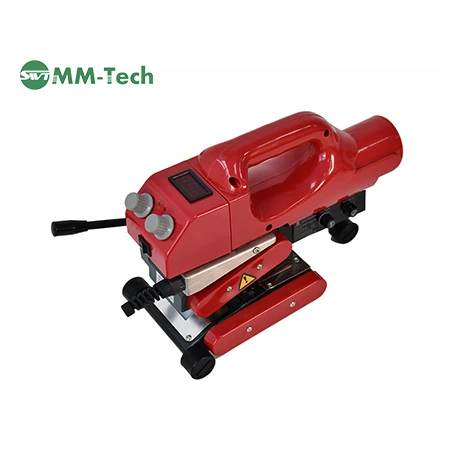

Geo Hot Wedge Welder With Digital Display SWT NS800D Operation Guide
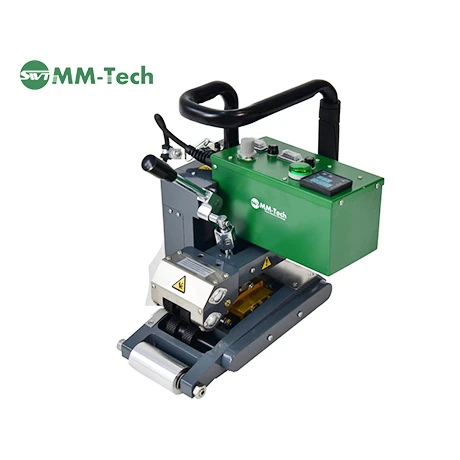
Heavy-Duty Geo Hot Wedge Welder SWT-NS900 Operation Guide
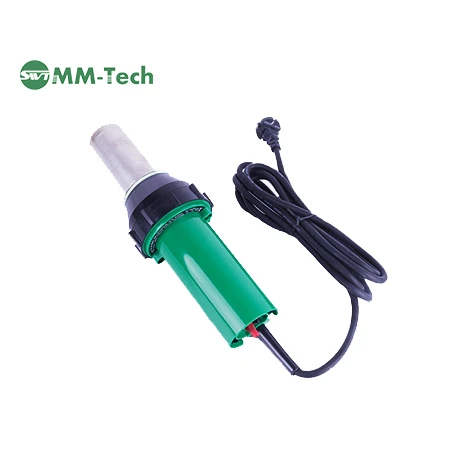
Powerful Professional Hot Air Tool SWT-NS3400A Operation Guide
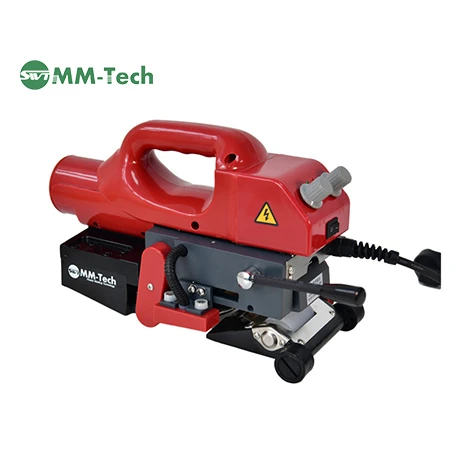
Geo Hot Wedge Welder SWT NS800 Operation Guide
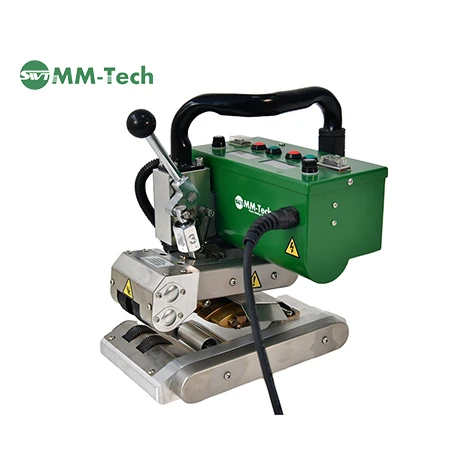
Compact HDPE Hot Wedge Welding Machine SWT-NSGM1 Operation Guide
Related News
2026-02-24 11:15:19
Comprehensive Guide to Plastic Extrusion Welding Machine Technology and Applications
Plastic extrusion welding machines are vital tools in numerous industries, facilitating the joining of thermoplastic materials with precision and efficiency. From constructing large tanks and vessels to fabricating pipelines and specialized components, these machines offer a robust and reliable solution. Understanding the different types, applications, and key features is crucial for making informed investment decisions. At MMTech Weld, we specialize in delivering high-quality plastic extrusion welding solutions tailored to diverse industrial needs. Choosing the right machine can significantly impact your production efficiency and the quality of your finished products. Plastic extrusion welding is a process where thermoplastic materials are melted and fused together using heat and pressure. The machine precisely controls the temperature, feed rate, and welding speed to create strong, leak-proof joints. These machines typically consist of a heating element, feed roller, welding shoe, and control panel. Different types of machines cater to specific applications and materials, ranging from portable units for smaller projects to automated systems for large-scale production. The key to a successful weld is ensuring consistent heat distribution and proper material compatibility.
2026-02-11 02:45:23
Comprehensive Guide to Plastic Extrusion Welding Techniques and Equipment Selection
Plastic extrusion welding is a versatile and efficient process used to join thermoplastic materials. This technique is widely employed across various industries, from automotive and construction to marine and chemical processing. At MM Tech Weld, we specialize in providing high-quality plastic extrusion welders and related solutions. This article delves into the intricacies of plastic extrusion welding, its applications, benefits, and key considerations for choosing the right equipment. Understanding this process can significantly improve your project efficiency and product quality. Plastic extrusion welding is a process where a thermoplastic welding material, typically a rod or wire, is melted and fed into the joint between two thermoplastic workpieces. The welding material is melted using a heated shoe, and as it cools, it fuses the two pieces together, creating a strong, leak-proof bond. Unlike other welding methods, extrusion welding doesn’t require the base materials to be completely melted, making it ideal for thicker sections and on-site repairs.
2026-01-30 14:55:50
Comprehensive Guide to Hand Extrusion Welder Applications and Selection
A hand extrusion welder is a portable and versatile tool used for joining thermoplastic materials. It’s a crucial piece of equipment in various industries, from plastic fabrication to pipeline repair. This article provides a comprehensive guide to hand extrusion welders, exploring their applications, benefits, key considerations when choosing one, and how MM Tech Weld delivers high-quality solutions. Understanding this technology allows professionals to optimize welding processes and achieve durable, reliable results. A hand extrusion welder operates by melting thermoplastic welding rods and extruding the molten material into the joint to be welded. The welder consists of a heating element, a feed mechanism for the welding rods, and a shoe or nozzle that guides the molten plastic.
2026-01-28 11:20:05
Comprehensive Guide to Pressure Leak Detectors for Enhanced Safety and Efficiency
In industries dealing with gases, vacuum systems, and pressurized environments, identifying leaks quickly and accurately is paramount for safety, efficiency, and cost control. A pressure leak detector is a critical tool for these applications, offering a non-destructive method to pinpoint even the smallest breaches in containment. This article will explore the different types of pressure leak detectors, their applications, advantages, and considerations for choosing the right detector for your specific needs. Efficient leak detection translates directly to minimized product loss, reduced energy consumption, and a safer working environment. Several technologies are employed in pressure leak detectors, each with its strengths and weaknesses. Some common types include: Bubble leak detectors, using a soap solution to reveal leaks as bubbles; Halogen leak detectors, sensitive to halogen-containing refrigerants; Ultrasonic leak detectors, detecting the high-frequency sound generated by escaping gas; and Mass spectrometer leak detectors (helium leak detectors), offering extremely high sensitivity by identifying helium molecules.
2026-01-27 22:55:02
Comprehensive Guide to Vacuum Leak Detection and Repair Techniques
Detecting and repairing vacuum leaks is crucial for maintaining optimal performance in various systems, from automotive engines to industrial processes. A seemingly small leak can lead to significant inefficiencies, reduced power, and even system failure. This article will provide a detailed look into understanding vacuum leaks, the tools used to find them – specifically, vacuum leak finders – troubleshooting techniques, and preventative measures. We’ll cover common causes, best practices, and how to choose the right equipment for your needs. Addressing vacuum leaks promptly can save you time, money, and potential headaches. Several methods can be used to locate vacuum leaks. The most basic involves a visual inspection of hoses, gaskets, and connections. However, many leaks are small and difficult to detect with the naked eye.
2026-01-27 19:55:20
Bullseye Leak Detector A Comprehensive Guide for Efficient Leak Detection
Maintaining the integrity of pressurized systems is critical in numerous industries, from HVAC and refrigeration to automotive and plumbing. A seemingly small leak can lead to significant inefficiencies, costly repairs, and even safety hazards. The Bullseye leak detector is a powerful tool designed to quickly and accurately pinpoint leaks in a variety of applications. This article will delve into the features, benefits, and applications of this versatile detector, ensuring you can effectively identify and address leaks before they escalate. Accurate leak detection is paramount for ensuring system efficiency and safety, and the Bullseye provides a reliable solution for professionals across various trades.
2026-01-27 18:25:14
Wegener Extrusion Welder Technology for Robust Thermoplastic Joining Solutions
When it comes to reliable and efficient solutions for joining thermoplastic materials, a Wegener Extrusion Welder stands as a leading choice. Known for its precision and durability, Wegener technology is trusted by professionals in diverse industries. This article delves into the features, applications, and benefits of Wegener Extrusion Welders, providing a thorough overview for those seeking a robust welding solution. Choosing the right equipment can significantly impact project quality and efficiency, and Wegener consistently delivers. Wegener extrusion welding utilizes a specialized machine that melts thermoplastic material and precisely extrudes it onto the joint area. This process creates a strong, homogenous weld, free from the weaknesses often associated with other joining methods. The controlled heat input minimizes distortion and stress on the materials. Unlike traditional welding techniques, it is exceptionally well-suited for large diameter pipe and complex geometries. MM Tech Weld’s Wegener machines offer unparalleled control and consistency for critical applications.
2026-01-25 02:10:06
Extrusion Welding HDPE Liner: A Guide
Learn about extrusion welding HDPE liner for industrial applications. Material specs, vendor comparison & why it’s a top choice for containment.
SUBSCRIBE NEWSLETTER
Dear customer, thank you for your attention! We provide high-quality machinery and equipment and look forward to your orders. Please inform us of your needs and we will respond quickly!






 English
  Arabic
  Bengali
  Czech
Czech  Dutch
Dutch  Finnish
  French
  German
  Hungarian
  Italian
  Japanese
  Korean
  Latin
Latin  Norwegian
  Polish
  Portuguese
  Russian
  Spanish
  Thai
Thai  Vietnamese