
-
 Email:news@peweldingmachine.com
-
 +86-137 3974 5191
-
 Add:
Add:NO.355,Youyi Street,Qiaoxi District,Shijiazhuang,Hebei,China.



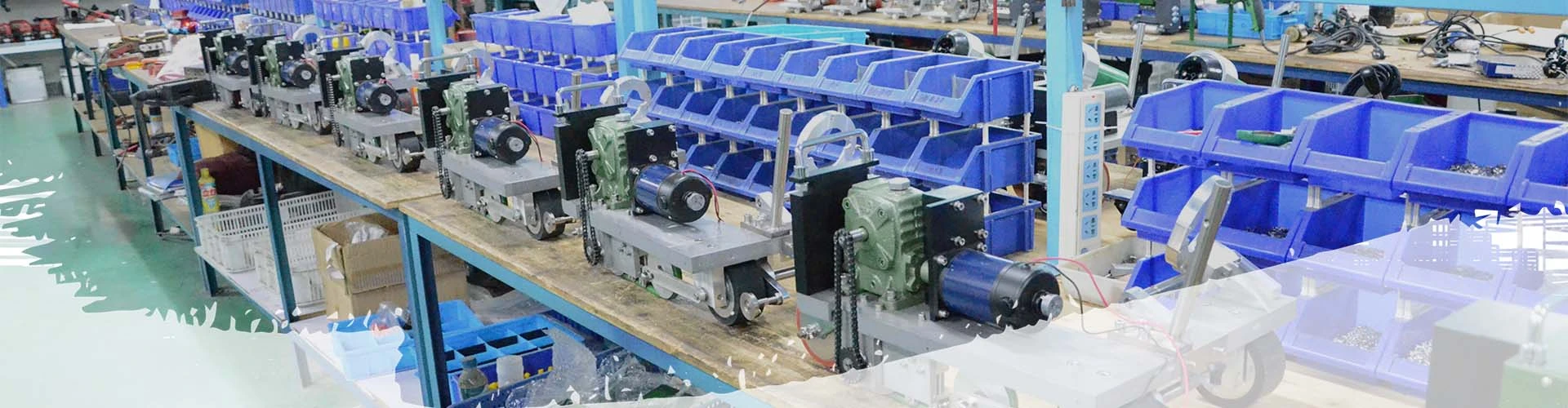
CX500L Hot Wedge Machine: Closed-Loop, Faster Seams?

CX500L Hot Wedge Machine: Closed-Loop, Faster Seams?
Oct . 10, 2025 14:55
Field Notes on the CX500L Hot Wedge Machine
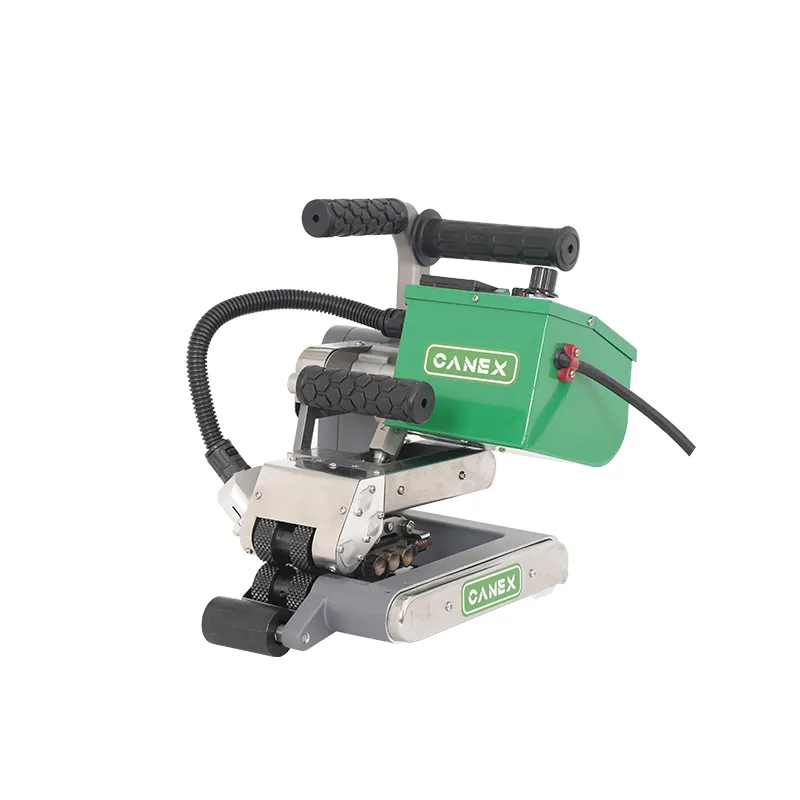
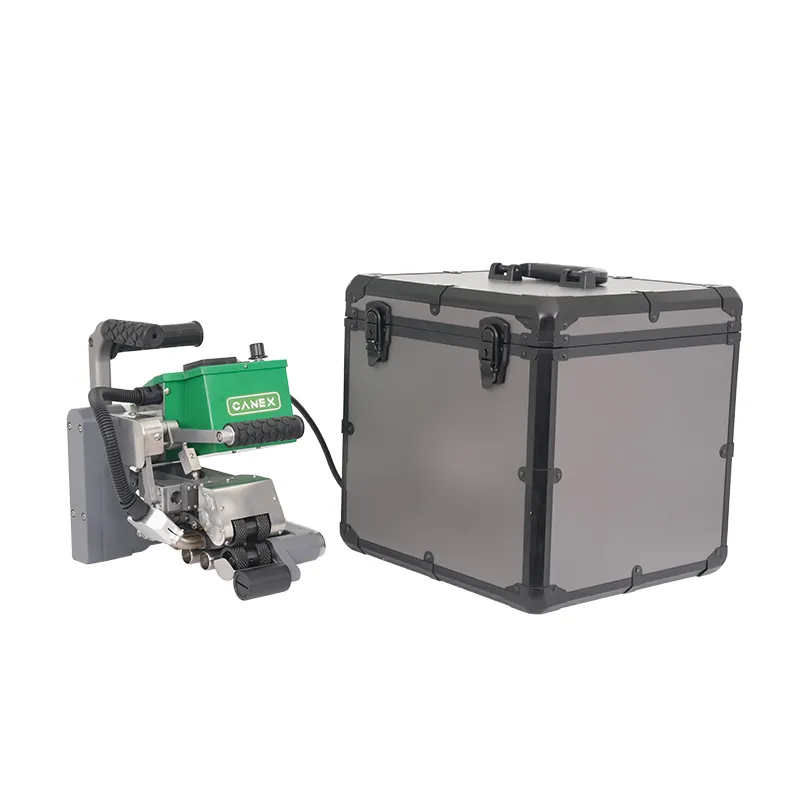
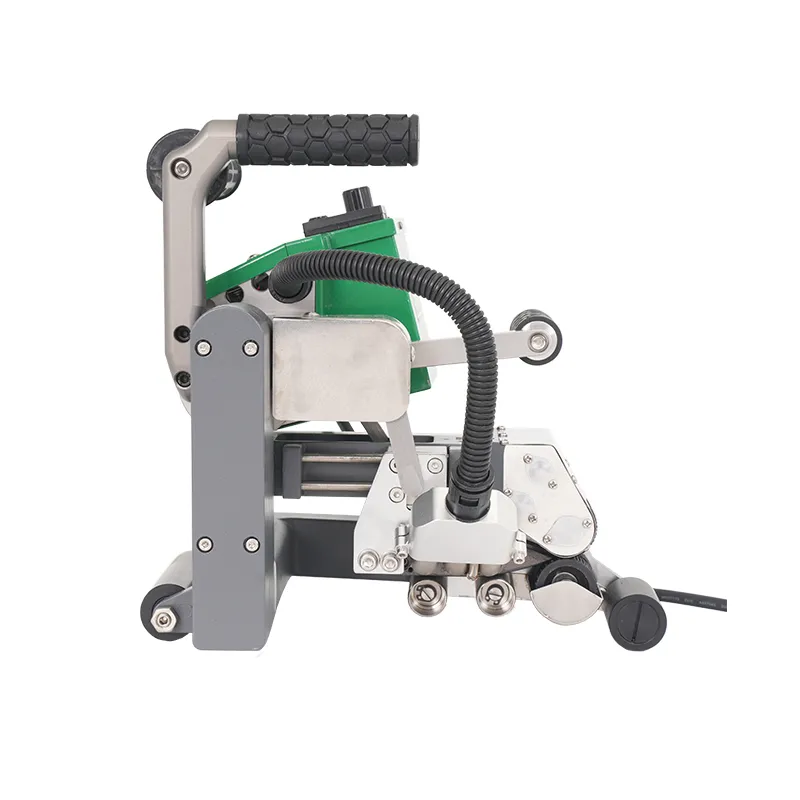
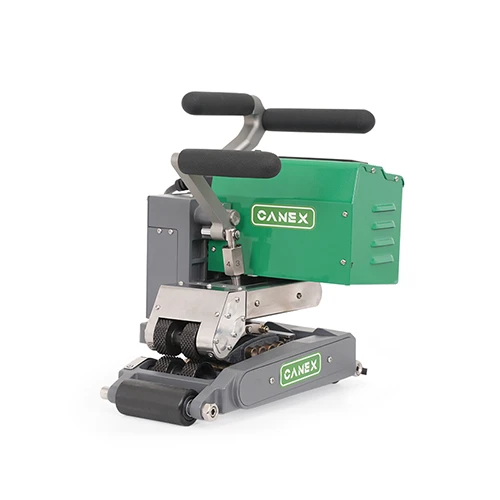
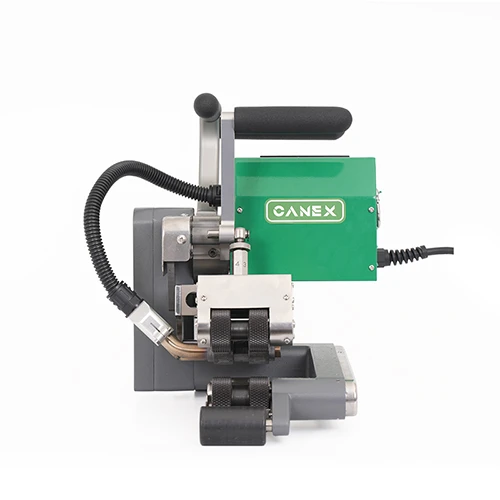
If you’ve been on a landfill cap in a crosswind or on a biogas dome at dawn (condensation everywhere), you already know why hot-wedge welders are having a moment. Speed, consistency, and—honestly—less drama. The CX500L Hot Wedge Machine is one I’ve seen pop up from Hebei to Latin America. It’s dual-purpose: single-sided feed for capping (handy on steep domes) and classic overlap welding with left/right feeds. That flexibility sounds minor until you’re staring at a 300 m roll with time ticking.
What’s changing in the field
Two big trends: contractors want dual-track welds with air-channel testing as standard, and owners are pushing for better documentation—QR-coded trial seams, photo logs, that kind of thing. The CX500L Hot Wedge Machine slots into that conversation with stable heat control and a footprint that doesn’t fight you on uneven subgrade. Many operators say the single-side feed mode is a surprising time-saver on biogas caps where access is awkward.
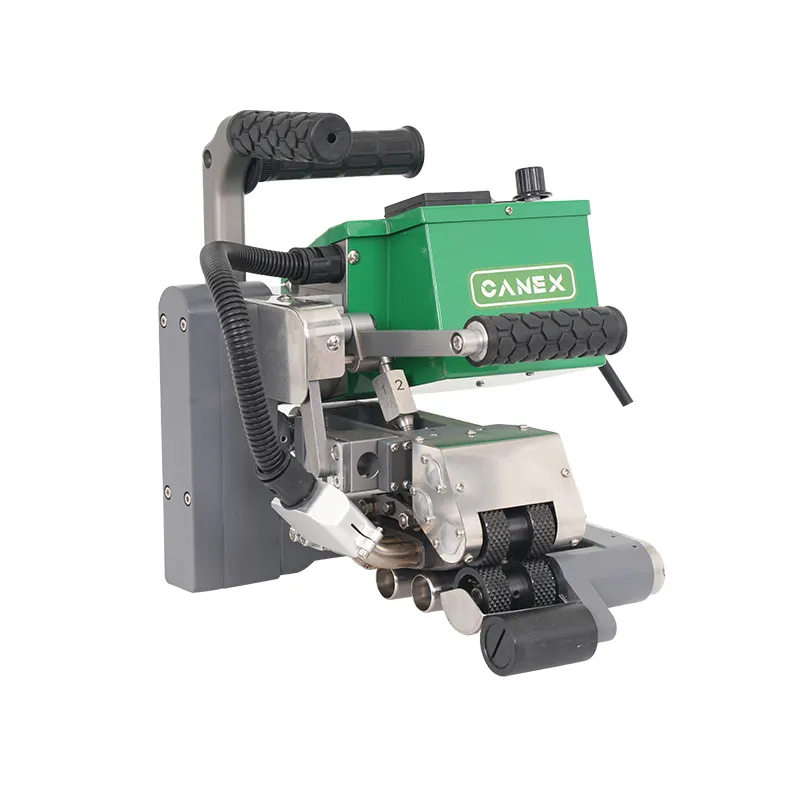
Specification snapshot (real-world use may vary)
| Power supply | ≈ 220–230 V AC, 50/60 Hz (110 V configurable) |
| Output power | ≈ 1200–1800 W |
| Temperature range | ≈ 80–460 °C, closed-loop control |
| Weld speed | ≈ 0.8–5.0 m/min depending on resin/thickness |
| Weld width | Dual-track with air channel (typ. 2×12–15 mm + channel) |
| Material range | HDPE, LLDPE, PP, some PVC geomembranes (verify trials) |
| Thickness window | ≈ 0.8–3.0 mm (site setup dependent) |
| Net weight | Around 10–16 kg |
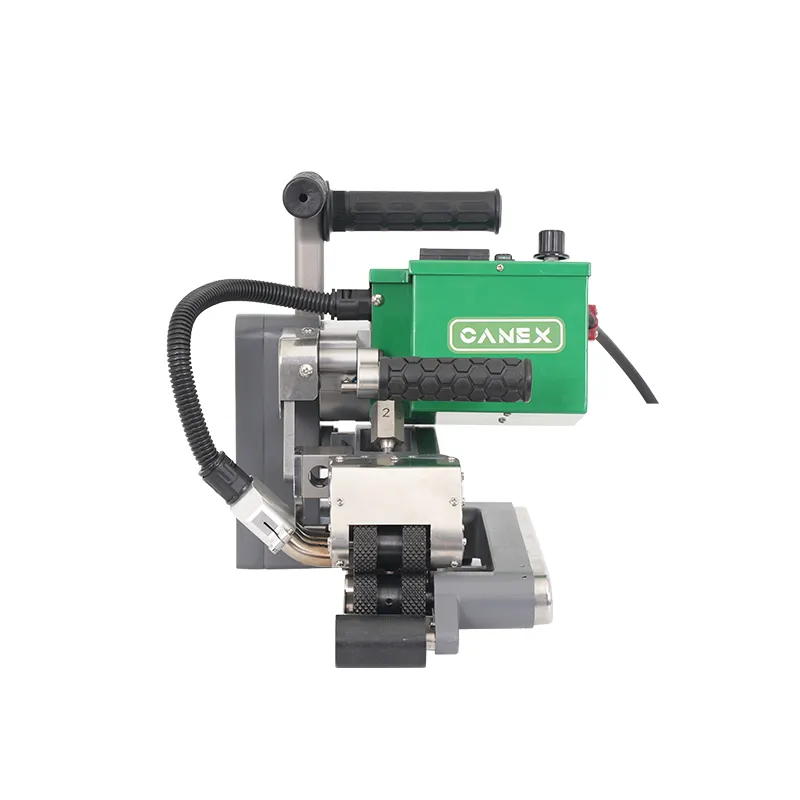
Process flow and QA—how crews actually run it
-
- Materials: HDPE/LLDPE liners for landfills, biogas domes, ponds, canals, heap leach pads.
- Method: Overlap 100–150 mm, clean surfaces, trial weld strips; tune temperature/pressure/speed.
- Testing: Peel/shear per ASTM D6392; air-channel pressure test per ASTM D7177; vacuum box per ASTM D5641 for single-track or details.
- Target results: Shear ≥ 90% of parent yield; peel FT-B where applicable (site dependent).
- Service life: Heater elements typically 1,000–1,500 h; drive belts/pressure wheels are wear items—inspect weekly.
In fact, most crews do two trial strips at start-of-shift and on weather changes. I’ve seen the CX500L Hot Wedge Machine hold temp better than expected when a cloud rolls in and liner cools fast—less scrambling.
Vendor comparison (indicative)
| Model | Strengths | Speed (≈) | Notes |
|---|---|---|---|
| MM-Tech CX500L Hot Wedge Machine | Dual-purpose feed; compact; budget-friendly | 0.8–5.0 m/min | Good for biogas caps and landfill cells |
| Leister Twinny (T series) | Refined controls; broad accessory ecosystem | ≈ 0.8–7.0 m/min | Premium pricing |
| Weldy WGW-class | Lightweight; straightforward UI | ≈ 0.8–4.5 m/min | Entry to mid-tier |
Customization, certifications, feedback
Customization typically covers wedge width, 110/230 V setups, longer power cords, and guide rollers for textured liners. Manufacturer location: NO.355, Youyi Street, Qiaoxi District, Shijiazhuang, Hebei, China. Certifications commonly requested: CE, ISO 9001 for the factory, and electrical safety per IEC 60204-1—ask for current certificates, to be honest.
Customer feedback I’ve heard (paraphrased): “stable heat on 1.5 mm HDPE at 3 m/min,” and “single-side feed saved hours on a dome job.” On one trial, peel and shear met ASTM D6392 with FT-B in most specimens at 1.5 mm HDPE; your site conditions may vary.
Quick case notes
- Biogas tank cap, Shandong (2024): single-side capping mode cut repositioning by ≈20%. Air-channel tests per ASTM D7177 passed at 200 kPa, 5 min hold.- Landfill cell, Chile (2023): Textured 1.5 mm HDPE at ≈2.2 m/min; vacuum box checks per ASTM D5641 were clean. Crew noted low rework rate.
Industries and applications
Landfills, biogas digesters, aquaculture ponds, canals, reservoirs, mining pads. Overlap seams, detail patches (with hand extruder assist), and dome capping where access is tight.
References
- ASTM D6392: Standard Test Methods for Integrity of Nonreinforced Geomembrane Seams.
- ASTM D7177: Air-Channel Pressure Testing of Geomembrane Seams.
- ASTM D5641: Practice for Geomembrane Seam Evaluation by Vacuum Chamber.
- GRI GM19a: Standard Specification for Seam Strength of Thermally Bonded Polyolefin Geomembranes.
- IEC 60204-1: Safety of Machinery—Electrical Equipment of Machines.

Related Products
Related Video

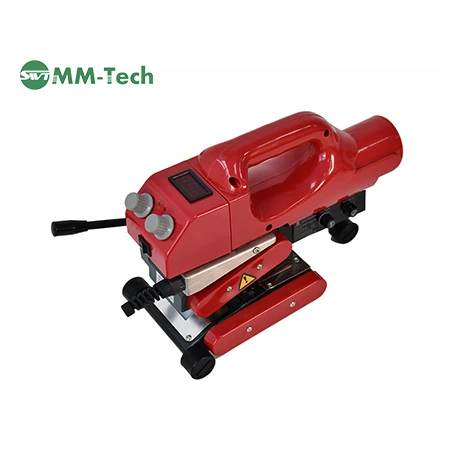

Geo Hot Wedge Welder With Digital Display SWT NS800D Operation Guide
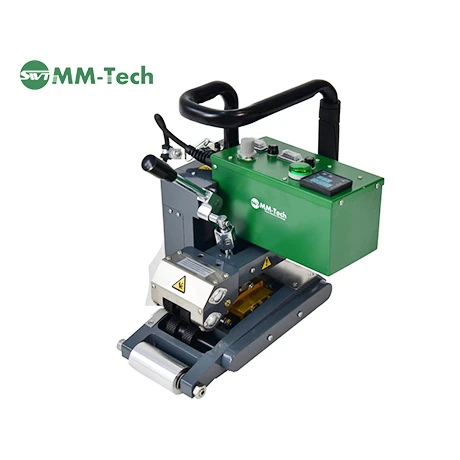
Heavy-Duty Geo Hot Wedge Welder SWT-NS900 Operation Guide
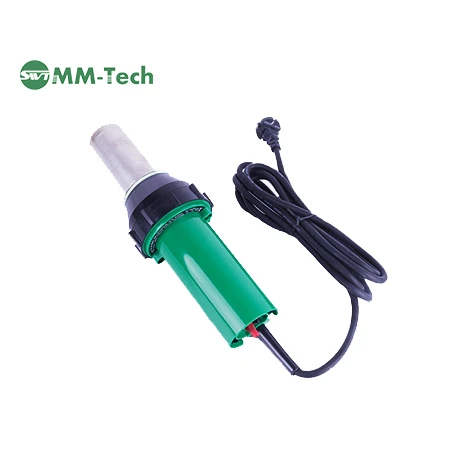
Powerful Professional Hot Air Tool SWT-NS3400A Operation Guide
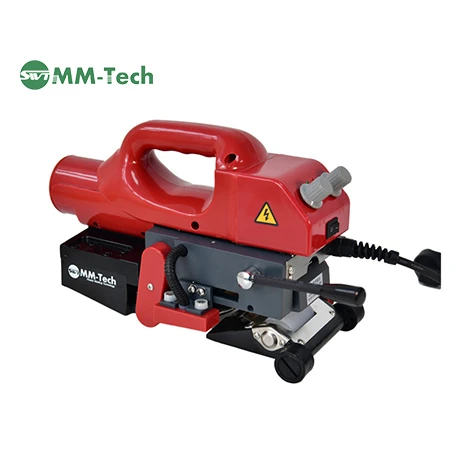
Geo Hot Wedge Welder SWT NS800 Operation Guide
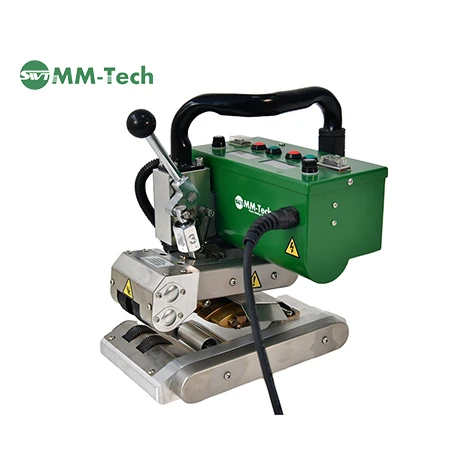
Compact HDPE Hot Wedge Welding Machine SWT-NSGM1 Operation Guide
Related News
2026-02-24 11:15:19
Comprehensive Guide to Plastic Extrusion Welding Machine Technology and Applications
Plastic extrusion welding machines are vital tools in numerous industries, facilitating the joining of thermoplastic materials with precision and efficiency. From constructing large tanks and vessels to fabricating pipelines and specialized components, these machines offer a robust and reliable solution. Understanding the different types, applications, and key features is crucial for making informed investment decisions. At MMTech Weld, we specialize in delivering high-quality plastic extrusion welding solutions tailored to diverse industrial needs. Choosing the right machine can significantly impact your production efficiency and the quality of your finished products. Plastic extrusion welding is a process where thermoplastic materials are melted and fused together using heat and pressure. The machine precisely controls the temperature, feed rate, and welding speed to create strong, leak-proof joints. These machines typically consist of a heating element, feed roller, welding shoe, and control panel. Different types of machines cater to specific applications and materials, ranging from portable units for smaller projects to automated systems for large-scale production. The key to a successful weld is ensuring consistent heat distribution and proper material compatibility.
2026-02-11 02:45:23
Comprehensive Guide to Plastic Extrusion Welding Techniques and Equipment Selection
Plastic extrusion welding is a versatile and efficient process used to join thermoplastic materials. This technique is widely employed across various industries, from automotive and construction to marine and chemical processing. At MM Tech Weld, we specialize in providing high-quality plastic extrusion welders and related solutions. This article delves into the intricacies of plastic extrusion welding, its applications, benefits, and key considerations for choosing the right equipment. Understanding this process can significantly improve your project efficiency and product quality. Plastic extrusion welding is a process where a thermoplastic welding material, typically a rod or wire, is melted and fed into the joint between two thermoplastic workpieces. The welding material is melted using a heated shoe, and as it cools, it fuses the two pieces together, creating a strong, leak-proof bond. Unlike other welding methods, extrusion welding doesn’t require the base materials to be completely melted, making it ideal for thicker sections and on-site repairs.
2026-01-30 14:55:50
Comprehensive Guide to Hand Extrusion Welder Applications and Selection
A hand extrusion welder is a portable and versatile tool used for joining thermoplastic materials. It’s a crucial piece of equipment in various industries, from plastic fabrication to pipeline repair. This article provides a comprehensive guide to hand extrusion welders, exploring their applications, benefits, key considerations when choosing one, and how MM Tech Weld delivers high-quality solutions. Understanding this technology allows professionals to optimize welding processes and achieve durable, reliable results. A hand extrusion welder operates by melting thermoplastic welding rods and extruding the molten material into the joint to be welded. The welder consists of a heating element, a feed mechanism for the welding rods, and a shoe or nozzle that guides the molten plastic.
2026-01-28 11:20:05
Comprehensive Guide to Pressure Leak Detectors for Enhanced Safety and Efficiency
In industries dealing with gases, vacuum systems, and pressurized environments, identifying leaks quickly and accurately is paramount for safety, efficiency, and cost control. A pressure leak detector is a critical tool for these applications, offering a non-destructive method to pinpoint even the smallest breaches in containment. This article will explore the different types of pressure leak detectors, their applications, advantages, and considerations for choosing the right detector for your specific needs. Efficient leak detection translates directly to minimized product loss, reduced energy consumption, and a safer working environment. Several technologies are employed in pressure leak detectors, each with its strengths and weaknesses. Some common types include: Bubble leak detectors, using a soap solution to reveal leaks as bubbles; Halogen leak detectors, sensitive to halogen-containing refrigerants; Ultrasonic leak detectors, detecting the high-frequency sound generated by escaping gas; and Mass spectrometer leak detectors (helium leak detectors), offering extremely high sensitivity by identifying helium molecules.
2026-01-27 22:55:02
Comprehensive Guide to Vacuum Leak Detection and Repair Techniques
Detecting and repairing vacuum leaks is crucial for maintaining optimal performance in various systems, from automotive engines to industrial processes. A seemingly small leak can lead to significant inefficiencies, reduced power, and even system failure. This article will provide a detailed look into understanding vacuum leaks, the tools used to find them – specifically, vacuum leak finders – troubleshooting techniques, and preventative measures. We’ll cover common causes, best practices, and how to choose the right equipment for your needs. Addressing vacuum leaks promptly can save you time, money, and potential headaches. Several methods can be used to locate vacuum leaks. The most basic involves a visual inspection of hoses, gaskets, and connections. However, many leaks are small and difficult to detect with the naked eye.
2026-01-27 19:55:20
Bullseye Leak Detector A Comprehensive Guide for Efficient Leak Detection
Maintaining the integrity of pressurized systems is critical in numerous industries, from HVAC and refrigeration to automotive and plumbing. A seemingly small leak can lead to significant inefficiencies, costly repairs, and even safety hazards. The Bullseye leak detector is a powerful tool designed to quickly and accurately pinpoint leaks in a variety of applications. This article will delve into the features, benefits, and applications of this versatile detector, ensuring you can effectively identify and address leaks before they escalate. Accurate leak detection is paramount for ensuring system efficiency and safety, and the Bullseye provides a reliable solution for professionals across various trades.
2026-01-27 18:25:14
Wegener Extrusion Welder Technology for Robust Thermoplastic Joining Solutions
When it comes to reliable and efficient solutions for joining thermoplastic materials, a Wegener Extrusion Welder stands as a leading choice. Known for its precision and durability, Wegener technology is trusted by professionals in diverse industries. This article delves into the features, applications, and benefits of Wegener Extrusion Welders, providing a thorough overview for those seeking a robust welding solution. Choosing the right equipment can significantly impact project quality and efficiency, and Wegener consistently delivers. Wegener extrusion welding utilizes a specialized machine that melts thermoplastic material and precisely extrudes it onto the joint area. This process creates a strong, homogenous weld, free from the weaknesses often associated with other joining methods. The controlled heat input minimizes distortion and stress on the materials. Unlike traditional welding techniques, it is exceptionally well-suited for large diameter pipe and complex geometries. MM Tech Weld’s Wegener machines offer unparalleled control and consistency for critical applications.
2026-01-25 02:10:06
Extrusion Welding HDPE Liner: A Guide
Learn about extrusion welding HDPE liner for industrial applications. Material specs, vendor comparison & why it’s a top choice for containment.
SUBSCRIBE NEWSLETTER
Dear customer, thank you for your attention! We provide high-quality machinery and equipment and look forward to your orders. Please inform us of your needs and we will respond quickly!






 English
  Arabic
  Bengali
  Czech
Czech  Dutch
Dutch  Finnish
  French
  German
  Hungarian
  Italian
  Japanese
  Korean
  Latin
Latin  Norwegian
  Polish
  Portuguese
  Russian
  Spanish
  Thai
Thai  Vietnamese