
-
 Email:news@peweldingmachine.com, sales2@peweldingmachine.com
-
 +86-137 3974 5191
-
 Add:
NO.355,Youyi Street,Qiaoxi District,Shijiazhuang,Hebei,China.



Durable Plastic Extrusion Welder for HDPE & Poly Welding

Durable Plastic Extrusion Welder for HDPE & Poly Welding
Sep . 12, 2025 11:40
Advancing Industrial Fabrication with Plastic Extrusion Welders
In demanding industrial environments, the integrity and longevity of plastic constructions are paramount. The emergence of advanced welding technologies, particularly the plastic extrusion welder, has revolutionized the fabrication and repair of thermoplastic materials. This specialized equipment is critical for creating robust, homogeneous joints in various polymer types, ensuring optimal performance and durability. From large-scale infrastructure projects to intricate chemical processing systems, the precision and strength offered by modern extrusion welding apparatus are indispensable. The demand for highly reliable methods to join materials like HDPE, PP, and PVDF has driven significant innovation in this sector, making these welders a cornerstone of contemporary engineering and manufacturing.
These sophisticated devices are not merely tools but comprehensive solutions designed to meet stringent industry standards, offering unparalleled control over the welding process. As industries evolve towards more durable and corrosion-resistant materials, the role of a high-performance plastic extrusion welder becomes increasingly vital, enabling the creation of structures that withstand extreme conditions and extended service lives.
The Advanced Manufacturing Process of a Plastic Extrusion Welder
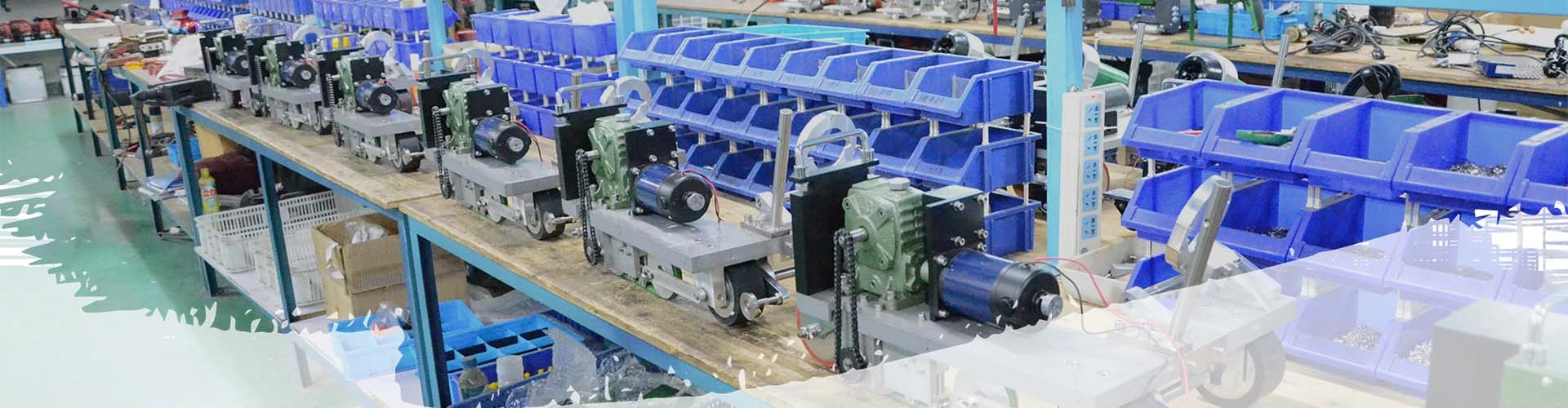
The manufacturing of a high-quality plastic extrusion welder, such as the SWT-NS600B, involves a meticulous, multi-stage process, integrating advanced engineering and robust materials to ensure peak performance and longevity. Each component is precisely crafted to meet stringent quality and reliability benchmarks.
Key Stages in Production:
- Material Selection and Preparation: High-grade, heat-resistant polymers are selected for the housing and non-metallic parts, ensuring durability and electrical insulation. Critical metallic components, such as the screw, barrel, and heating elements, are typically forged or cast from specialized alloys (e.g., tool steel, stainless steel) known for their excellent thermal conductivity, wear resistance, and corrosion resistance. For instance, the extrusion screw often undergoes nitriding or chrome plating to enhance surface hardness and reduce friction.
- Precision Machining: Components like the extrusion barrel, screw, and motor housing are manufactured using state-of-the-art CNC machining. This ensures micron-level tolerances for optimal material flow, consistent heat distribution, and minimal wear during operation. The precision of these parts is crucial for the consistent output and quality of the weld.
- Heating Element Integration: Advanced ceramic or mica band heaters are incorporated, designed for rapid heating and precise temperature control. These elements are strategically placed around the barrel to maintain an even melt temperature for the welding rod, which is critical for strong, homogeneous welds.
- Electronic Control System Assembly: The sophisticated control board, which manages temperature, motor speed, and air flow, is assembled with industrial-grade microprocessors and sensors. This module is rigorously tested for accuracy, stability, and adherence to electrical safety standards (e.g., IEC 60335).
- Ergonomic Design and Assembly: The various sub-assemblies are integrated into a robust, ergonomically designed housing. Attention is paid to weight distribution, grip comfort, and intuitive interface placement, reducing operator fatigue during prolonged use, a key aspect for any HDPE extrusion welding gun.
- Quality Assurance and Testing: Each unit undergoes comprehensive testing. This includes electrical safety checks (dielectric strength, ground continuity), functional tests (heating curve accuracy, motor performance, airflow stability), and weld quality tests on various plastic samples (e.g., HDPE, PP) to verify the machine's ability to produce consistent, strong welds as per ISO 13953/13954 standards for plastics welding. Endurance tests simulate extended operational periods to ensure a service life exceeding industry expectations, typically 5-10 years with proper maintenance.
These rigorous processes ensure that the final poly extrusion welder not only performs flawlessly but also offers superior energy efficiency due to optimized heating elements and precise control systems, and unparalleled corrosion resistance given the material choices for critical components.

Current Industry Trends in Plastic Extrusion Welding
The plastic fabrication industry is experiencing dynamic shifts, profoundly impacting the development and application of plastic extrusion welding gun for sale units. Key trends reflect a move towards enhanced performance, sustainability, and operational intelligence.
- Automation and Digitalization: The integration of digital controls, programmable welding parameters, and data logging capabilities is becoming standard. This allows for improved weld consistency, traceability, and easier compliance with quality standards, crucial for critical applications.
- Ergonomics and Portability: Manufacturers are focusing on lighter, more compact designs that reduce operator fatigue and improve maneuverability in confined spaces. This is particularly important for field applications of HDPE extrusion welding gun.
- Energy Efficiency: With rising energy costs and environmental awareness, the development of more energy-efficient heating systems and motors is a priority, reducing operational costs and carbon footprint.
- Versatility Across Materials: While HDPE remains dominant, there's increasing demand for welders capable of handling a wider range of engineering plastics, including PP, PVDF, and even some specialized polyolefins, with optimized material-specific profiles.
- Enhanced Safety Features: Advanced safety protocols, including automatic shutdown mechanisms, overheating protection, and improved electrical insulation, are being integrated to protect operators and equipment.
- Remote Monitoring and Diagnostics: Some high-end models are beginning to incorporate connectivity features, allowing for remote diagnostics, software updates, and performance monitoring, optimizing uptime and maintenance schedules.
These trends collectively push the boundaries of what a plastic extrusion welding machine can achieve, offering greater precision, efficiency, and reliability for industrial users.
Technical Specifications: SWT-NS600B Plastic Extrusion Welder
The SWT-NS600B plastic extrusion welder exemplifies advanced engineering in its class, designed for robust performance across various industrial applications. Its specifications reflect a commitment to precision, power, and user efficiency, making it a leading choice for demanding welding tasks.
Product Specification Table: SWT-NS600B Extrusion Welder
| Parameter | Value / Description |
|---|---|
| Model | SWT-NS600B |
| Input Voltage | 230V (Single Phase) |
| Heating Power (Extrusion) | 1600W |
| Heating Power (Hot Air) | 3400W |
| Welding Rod Diameter | 3.0mm - 4.0mm (standard) |
| Extrusion Volume | Up to 2.5 kg/h (HDPE) |
| Material Compatibility | HDPE, PP, PVDF |
| Max Weld Thickness | 15-40mm (depending on joint design) |
| Temperature Control | Independent digital control for hot air and extrusion temperature |
| Motor Type | High-torque, brush-less drive motor |
| Weight | Approx. 7.0 kg (excluding cable) |
| Dimensions (L×W×H) | Approx. 520mm × 120mm × 280mm |
| Safety Features | Overheat protection, cold start lockout, ergonomic handle with anti-slip grip |
| Certifications | CE, ISO 9001:2015 |
The independent digital temperature control for both the hot air preheating and the extrusion melt ensures optimal welding conditions for various plastic thicknesses and types. The high extrusion volume and powerful heating elements make this plastic extrusion welder suitable for heavy-duty, continuous operation in demanding industrial settings, providing the capability to create impermeable welds of exceptional strength and consistency.

Diverse Application Scenarios for Extrusion Welders
The versatility and robustness of the plastic extrusion welder make it an indispensable tool across a broad spectrum of industries, solving critical fabrication and repair challenges. Its ability to produce thick, strong, and chemically resistant welds opens up numerous application possibilities.
Primary Industries and Applications:
- Petrochemical and Chemical Processing: Fabrication and repair of chemical storage tanks, reactor linings, ventilation ducts, and pipe systems made from HDPE, PP, or PVDF. The high chemical resistance of welded joints is critical here.
- Water Supply & Drainage Systems: Welding large-diameter HDPE pipes for municipal water mains, sewage treatment plants, and industrial drainage. The impermeability and strength of extrusion welds ensure leak-free, long-lasting infrastructure. This is where an HDPE extrusion welder excels.
- Mining Industry: Joining geomembranes for leach pads, tailings dams, and water containment ponds, as well as fabricating acid-resistant tanks and ventilation shafts. The rugged nature of these sites demands durable welding solutions.
- Landfill and Environmental Engineering: Sealing geomembranes in landfill liners, waste containment barriers, and biogas collection systems. The long-term integrity of these welds is vital for environmental protection.
- Aquaculture and Agriculture: Constructing large-scale fish farms, water reservoirs, and irrigation channels. The ability to create large, watertight surfaces efficiently is a significant advantage.
- Fabrication of Plastic Products: Manufacturing custom plastic components, storage bins, laboratory equipment, and industrial container111s where robust, seamless joints are required.
These examples underscore the critical role of the plastic extrusion welder in maintaining operational integrity and environmental compliance across heavy industries. Its capacity to handle thick materials and produce strong, consistent welds in challenging conditions sets it apart from other welding methods.
Key Technical Advantages of Modern Extrusion Welders
Modern plastic extrusion welders offer a multitude of technical advantages that translate directly into operational efficiencies, enhanced product quality, and long-term cost savings for industrial users. These benefits are particularly pronounced when working with thick-walled plastic materials where other welding techniques may fall short.
- Superior Weld Strength and Homogeneity: By extruding molten plastic directly into the preheated joint, extrusion welders create a virtually seamless bond that matches or exceeds the strength of the parent material. This results in incredibly durable and impermeable welds, critical for pressure-bearing or containment applications.
- High Production Speed for Thick Materials: Unlike hot air or hot plate welding, extrusion welding can deposit a significant volume of molten material rapidly, making it ideal for thick-gauge plastics (e.g., 10mm to 40mm). This drastically reduces fabrication time for large structures.
- Optimized Material Fusion: The dual heating system (hot air preheating and melt extrusion) ensures that both the parent material and the welding rod reach the optimal fusion temperature simultaneously, preventing cold spots and ensuring a molecular bond.
- Versatility in Weld Geometry: With interchangeable welding shoes/nozzles, an HDPE extrusion welding machine can perform various weld types, including fillet welds, V-grooves, and corner welds, adapting to complex geometries.
- Enhanced Durability and Service Life: Constructed with robust components and designed for continuous operation, these welders offer extended service life and consistent performance, minimizing downtime and maintenance costs.
- Precise Process Control: Digital temperature controls for both the hot air and extrusion temperature, along with adjustable motor speed, allow operators to fine-tune welding parameters for specific materials and ambient conditions, ensuring optimal weld quality every time.
These advantages collectively underscore why the plastic extrusion welder is the preferred method for critical and high-performance plastic fabrication tasks, delivering results that are both reliable and economically efficient.

Vendor Comparison and Strategic Selection
Choosing the right plastic extrusion welder vendor is as critical as selecting the equipment itself. A strategic comparison involves evaluating not just product specifications but also the holistic support and value offered by the supplier. Key differentiators include manufacturing quality, innovation, after-sales service, and adherence to international standards.
Key Comparison Factors:
- Build Quality and Durability: Assess the materials used, the precision of manufacturing processes (e.g., CNC machining), and the overall robustness. Leading manufacturers, often ISO certified, ensure their machines withstand harsh industrial environments.
- Performance and Efficiency: Compare extrusion volume, heating power, temperature control accuracy, and energy consumption. Superior models offer consistent high output with precise temperature management, leading to better weld quality and lower operating costs.
- Ergonomics and User Experience: Consider the weight, balance, grip, and ease of use. A well-designed machine reduces operator fatigue and increases productivity, especially for an HDPE extrusion welding gun used for extended periods.
- Certifications and Compliance: Verify international certifications (e.g., CE, RoHS, ISO 9001) that signify adherence to safety and quality standards, crucial for global operations and insurance.
- After-Sales Support and Spare Parts: Evaluate the availability of technical support, training, spare parts, and warranty conditions. A reliable vendor offers comprehensive support, minimizing downtime and maximizing equipment lifespan.
- Innovation and R&D: Suppliers investing in research and development often offer more advanced features, improved efficiency, and solutions for emerging materials or applications.
Generic Product Comparison Table: Extrusion Welders
| Feature | Leading Manufacturer (e.g., SWT-NS600B) | General Market Offering |
|---|---|---|
| Extrusion Output (kg/h HDPE) | 2.0 - 2.5 | 1.0 - 1.8 |
| Temperature Control | Independent Digital (Air & Melt) | Analog / Combined Digital |
| Motor Type | Brushless, High-Torque | Brushed, Standard Torque |
| Safety Features | Advanced Overheat, Cold Start Lockout | Basic Overheat |
| Material Compatibility | HDPE, PP, PVDF (optimized profiles) | HDPE, PP (limited optimization) |
| Certifications | CE, ISO 9001:2015 | Often CE only, limited ISO |
This comparison highlights the benefits of investing in a premium plastic extrusion welder. While initial costs might be higher, the long-term gains in efficiency, weld quality, and reduced downtime often result in a superior return on investment for B2B operations.
Customized Solutions for Specific Project Needs
Recognizing that no two industrial projects are identical, leading manufacturers of plastic extrusion welders offer customized solutions to address unique operational challenges. This adaptability ensures that clients receive equipment perfectly tailored to their specific materials, geometries, and production requirements.
Areas of Customization:
- Specialized Welding Shoes: Custom-designed welding shoes or nozzles can be fabricated to precisely fit unique joint configurations, tight corners, or specific pipe diameters, optimizing material flow and weld aesthetics.
- Material-Specific Heating Profiles: While standard welders handle common plastics, custom firmware or pre-programmed settings can be developed for welding more exotic or specialized thermoplastic compounds, ensuring optimal melting and fusion characteristics.
- Ergonomic Modifications: For continuous, repetitive tasks or specific working postures, slight adjustments to handle design, weight distribution, or accessory attachments can significantly improve operator comfort and productivity.
- Integration with Automation: For large-scale or high-volume production, extrusion welders can be adapted for integration into semi-automated or robotic welding systems, requiring specialized mounting points, control interfaces, and data feedback loops.
- Power Supply Adaptations: Machines can be configured for various international voltage standards or for integration with specialized power sources on remote job sites.
Engaging with a manufacturer capable of providing these tailored solutions ensures that the investment in a plastic extrusion welding gun for sale yields maximum efficiency and aligns perfectly with the project's technical demands, often reducing the need for costly post-welding adjustments or rework.
Application Case Studies: Real-World Impact
The practical application of the plastic extrusion welder demonstrates its unparalleled value in critical industrial scenarios, delivering reliable and durable solutions where conventional methods fall short. Here are illustrative case studies highlighting its impact.
Case Study 1: Large-Scale HDPE Geomembrane Installation for Landfill
A major environmental engineering firm required a robust solution for sealing thousands of square meters of HDPE geomembrane for a new municipal landfill. The project demanded high-integrity, continuous welds resistant to chemical leachate and extreme weather. Utilizing advanced HDPE extrusion welders with precise digital temperature control, the team achieved consistent, strong seam welds over complex terrains. The high output volume of the welders allowed for rapid progress, reducing project timelines by 15% compared to traditional hot wedge welding for detailing, while exceeding required strength specifications (e.g., meeting GRI GM19 standards). This ensured long-term environmental protection and regulatory compliance.
Case Study 2: Fabrication of Custom Chemical Storage Tanks
A chemical processing plant needed several custom-designed polypropylene (PP) storage tanks for aggressive acidic solutions. The tanks featured intricate internal baffling and nozzle connections, requiring numerous fillet and butt welds on thick PP sheets. Precision poly extrusion welders were deployed, equipped with specialized welding shoes for tight internal corners. The welders' ability to maintain exact melt temperatures and consistent material flow was crucial in creating homogeneous, stress-free welds that were impervious to chemical attack. Post-fabrication hydro-testing confirmed zero leakage, demonstrating the superior integrity achieved by extrusion welding.
Case Study 3: Repair of Large-Diameter HDPE Pipeline in Remote Location
An unexpected failure occurred in a critical 500mm diameter HDPE water pipeline in a remote mining operation. Rapid, on-site repair was essential to minimize operational downtime. A portable, powerful plastic extrusion welder was airlifted to the site. Its ergonomic design and high output capacity allowed field technicians to quickly prepare the damaged section and perform a full-penetration butt weld. The consistent strength and ductility of the extrusion weld restored the pipeline to full operational pressure within hours, preventing extensive production losses. The reliability and robustness of the equipment in challenging field conditions proved invaluable.

Ensuring Trust: FAQ, Support, and Warranty
Building long-term partnerships in the B2B sector relies heavily on transparency, reliability, and robust support infrastructure. When investing in a plastic extrusion welder, understanding the manufacturer's commitment to these areas is crucial.
Frequently Asked Questions (FAQ):
-
Q: What materials can the SWT-NS600B weld?
A: The SWT-NS600B is optimized for welding HDPE (High-Density Polyethylene), PP (Polypropylene), and PVDF (Polyvinylidene Fluoride) with appropriate welding rods and parameter adjustments.
-
Q: How do I ensure optimal weld quality?
A: Optimal weld quality depends on precise temperature control for both hot air and extrusion, correct material preparation (cleaning, beveling), consistent welding speed, and using compatible welding rods. Refer to the operational manual for detailed guidelines.
-
Q: What is the recommended maintenance schedule?
A: Regular cleaning of the extrusion screw and barrel, inspection of heating elements and nozzles, and checking electrical connections are recommended after each use or shift. Annual professional servicing is advised for optimal performance and longevity.
-
Q: Are spare parts readily available?
A: Yes, critical spare parts such as heating elements, motors, and welding shoes are typically stocked and available for prompt dispatch to minimize downtime.
Lead Time & Fulfillment Details:
Typical lead times for the SWT-NS600B plastic extrusion welder range from 1-3 weeks, depending on order volume and current stock levels. For customized solutions, lead times may vary and will be confirmed at the time of order. We maintain efficient logistics channels to ensure timely and secure delivery to global destinations.
Warranty Commitments:
All SWT-NS600B HDPE extrusion welders are backed by a standard 12-month manufacturer's warranty covering defects in materials and workmanship. Extended warranty options are available upon request. Our commitment ensures peace of mind, knowing your investment is protected by comprehensive support.
Customer Support Information:
Our dedicated technical support team is available to assist with installation, operation, troubleshooting, and maintenance queries. Support can be accessed via phone, email, or live chat during business hours. We also offer training programs to ensure your team is proficient in operating and maintaining the equipment effectively.
Conclusion and References
The plastic extrusion welder stands as a testament to advanced engineering in the realm of thermoplastic fabrication. Its capacity for producing high-strength, consistent, and durable welds across challenging materials and demanding environments makes it indispensable for industries ranging from petrochemical to water management. By adhering to rigorous manufacturing standards, offering comprehensive technical specifications, and providing robust after-sales support, leading manufacturers ensure that these critical tools deliver unparalleled performance and return on investment. As industries continue to seek more resilient and efficient solutions for plastic joining, the evolution of the extrusion welder will undoubtedly remain at the forefront of innovation.
Authoritative References:
- ISO 9001:2015 - Quality management systems — Requirements. International Organization for Standardization.
- ISO 13953:2001 - Plastics pipes and fittings — Determination of the tensile properties of butt fusion joints. International Organization for Standardization.
- ISO 13954:2012 - Plastics pipes and fittings — Butt fusion joints — Test method for peel decohesion. International Organization for Standardization.
- GRI GM19 - Standard Specification for "Smooth" High Density Polyethylene (HDPE) Geomembranes. Geosynthetic Institute.
- IEC 60335 - Safety of household and similar electrical appliances. International Electrotechnical Commission.

Related Products
Related Video

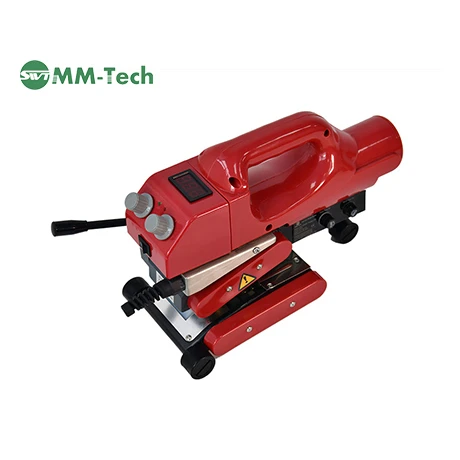

Geo Hot Wedge Welder With Digital Display SWT NS800D Operation Guide
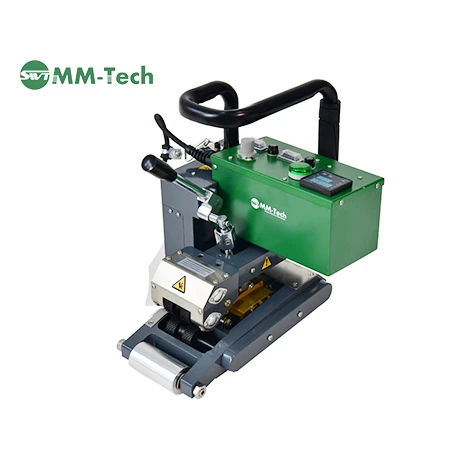
Heavy-Duty Geo Hot Wedge Welder SWT-NS900 Operation Guide
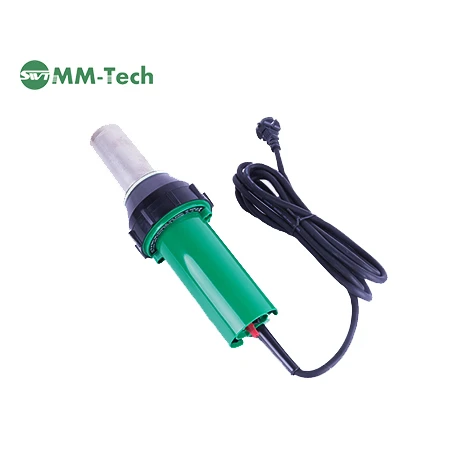
Powerful Professional Hot Air Tool SWT-NS3400A Operation Guide
Geo Hot Wedge Welder SWT NS800 Operation Guide
Compact HDPE Hot Wedge Welding Machine SWT-NSGM1 Operation Guide
Related News
2026-02-24 11:15:19
Comprehensive Guide to Plastic Extrusion Welding Machine Technology and Applications
Plastic extrusion welding machines are vital tools in numerous industries, facilitating the joining of thermoplastic materials with precision and efficiency. From constructing large tanks and vessels to fabricating pipelines and specialized components, these machines offer a robust and reliable solution. Understanding the different types, applications, and key features is crucial for making informed investment decisions. At MMTech Weld, we specialize in delivering high-quality plastic extrusion welding solutions tailored to diverse industrial needs. Choosing the right machine can significantly impact your production efficiency and the quality of your finished products. Plastic extrusion welding is a process where thermoplastic materials are melted and fused together using heat and pressure. The machine precisely controls the temperature, feed rate, and welding speed to create strong, leak-proof joints. These machines typically consist of a heating element, feed roller, welding shoe, and control panel. Different types of machines cater to specific applications and materials, ranging from portable units for smaller projects to automated systems for large-scale production. The key to a successful weld is ensuring consistent heat distribution and proper material compatibility.
2026-02-11 02:45:23
Comprehensive Guide to Plastic Extrusion Welding Techniques and Equipment Selection
Plastic extrusion welding is a versatile and efficient process used to join thermoplastic materials. This technique is widely employed across various industries, from automotive and construction to marine and chemical processing. At MM Tech Weld, we specialize in providing high-quality plastic extrusion welders and related solutions. This article delves into the intricacies of plastic extrusion welding, its applications, benefits, and key considerations for choosing the right equipment. Understanding this process can significantly improve your project efficiency and product quality. Plastic extrusion welding is a process where a thermoplastic welding material, typically a rod or wire, is melted and fed into the joint between two thermoplastic workpieces. The welding material is melted using a heated shoe, and as it cools, it fuses the two pieces together, creating a strong, leak-proof bond. Unlike other welding methods, extrusion welding doesn’t require the base materials to be completely melted, making it ideal for thicker sections and on-site repairs.
2026-01-30 14:55:50
Comprehensive Guide to Hand Extrusion Welder Applications and Selection
A hand extrusion welder is a portable and versatile tool used for joining thermoplastic materials. It’s a crucial piece of equipment in various industries, from plastic fabrication to pipeline repair. This article provides a comprehensive guide to hand extrusion welders, exploring their applications, benefits, key considerations when choosing one, and how MM Tech Weld delivers high-quality solutions. Understanding this technology allows professionals to optimize welding processes and achieve durable, reliable results. A hand extrusion welder operates by melting thermoplastic welding rods and extruding the molten material into the joint to be welded. The welder consists of a heating element, a feed mechanism for the welding rods, and a shoe or nozzle that guides the molten plastic.
2026-01-28 11:20:05
Comprehensive Guide to Pressure Leak Detectors for Enhanced Safety and Efficiency
In industries dealing with gases, vacuum systems, and pressurized environments, identifying leaks quickly and accurately is paramount for safety, efficiency, and cost control. A pressure leak detector is a critical tool for these applications, offering a non-destructive method to pinpoint even the smallest breaches in containment. This article will explore the different types of pressure leak detectors, their applications, advantages, and considerations for choosing the right detector for your specific needs. Efficient leak detection translates directly to minimized product loss, reduced energy consumption, and a safer working environment. Several technologies are employed in pressure leak detectors, each with its strengths and weaknesses. Some common types include: Bubble leak detectors, using a soap solution to reveal leaks as bubbles; Halogen leak detectors, sensitive to halogen-containing refrigerants; Ultrasonic leak detectors, detecting the high-frequency sound generated by escaping gas; and Mass spectrometer leak detectors (helium leak detectors), offering extremely high sensitivity by identifying helium molecules.
2026-01-27 22:55:02
Comprehensive Guide to Vacuum Leak Detection and Repair Techniques
Detecting and repairing vacuum leaks is crucial for maintaining optimal performance in various systems, from automotive engines to industrial processes. A seemingly small leak can lead to significant inefficiencies, reduced power, and even system failure. This article will provide a detailed look into understanding vacuum leaks, the tools used to find them – specifically, vacuum leak finders – troubleshooting techniques, and preventative measures. We’ll cover common causes, best practices, and how to choose the right equipment for your needs. Addressing vacuum leaks promptly can save you time, money, and potential headaches. Several methods can be used to locate vacuum leaks. The most basic involves a visual inspection of hoses, gaskets, and connections. However, many leaks are small and difficult to detect with the naked eye.
2026-01-27 19:55:20
Bullseye Leak Detector A Comprehensive Guide for Efficient Leak Detection
Maintaining the integrity of pressurized systems is critical in numerous industries, from HVAC and refrigeration to automotive and plumbing. A seemingly small leak can lead to significant inefficiencies, costly repairs, and even safety hazards. The Bullseye leak detector is a powerful tool designed to quickly and accurately pinpoint leaks in a variety of applications. This article will delve into the features, benefits, and applications of this versatile detector, ensuring you can effectively identify and address leaks before they escalate. Accurate leak detection is paramount for ensuring system efficiency and safety, and the Bullseye provides a reliable solution for professionals across various trades.
2026-01-27 18:25:14
Wegener Extrusion Welder Technology for Robust Thermoplastic Joining Solutions
When it comes to reliable and efficient solutions for joining thermoplastic materials, a Wegener Extrusion Welder stands as a leading choice. Known for its precision and durability, Wegener technology is trusted by professionals in diverse industries. This article delves into the features, applications, and benefits of Wegener Extrusion Welders, providing a thorough overview for those seeking a robust welding solution. Choosing the right equipment can significantly impact project quality and efficiency, and Wegener consistently delivers. Wegener extrusion welding utilizes a specialized machine that melts thermoplastic material and precisely extrudes it onto the joint area. This process creates a strong, homogenous weld, free from the weaknesses often associated with other joining methods. The controlled heat input minimizes distortion and stress on the materials. Unlike traditional welding techniques, it is exceptionally well-suited for large diameter pipe and complex geometries. MM Tech Weld’s Wegener machines offer unparalleled control and consistency for critical applications.
2026-01-25 02:10:06
Extrusion Welding HDPE Liner: A Guide
Learn about extrusion welding HDPE liner for industrial applications. Material specs, vendor comparison & why it’s a top choice for containment.
SUBSCRIBE NEWSLETTER
Dear customer, thank you for your attention! We provide high-quality machinery and equipment and look forward to your orders. Please inform us of your needs and we will respond quickly!






 English
 Arabic
 Bengali
 Czech
 Dutch
 Finnish
 French
 German
 Hungarian
 Italian
 Japanese
 Korean
 Latin
 Norwegian
 Polish
 Portuguese
 Russian
 Spanish
 Thai
 Vietnamese